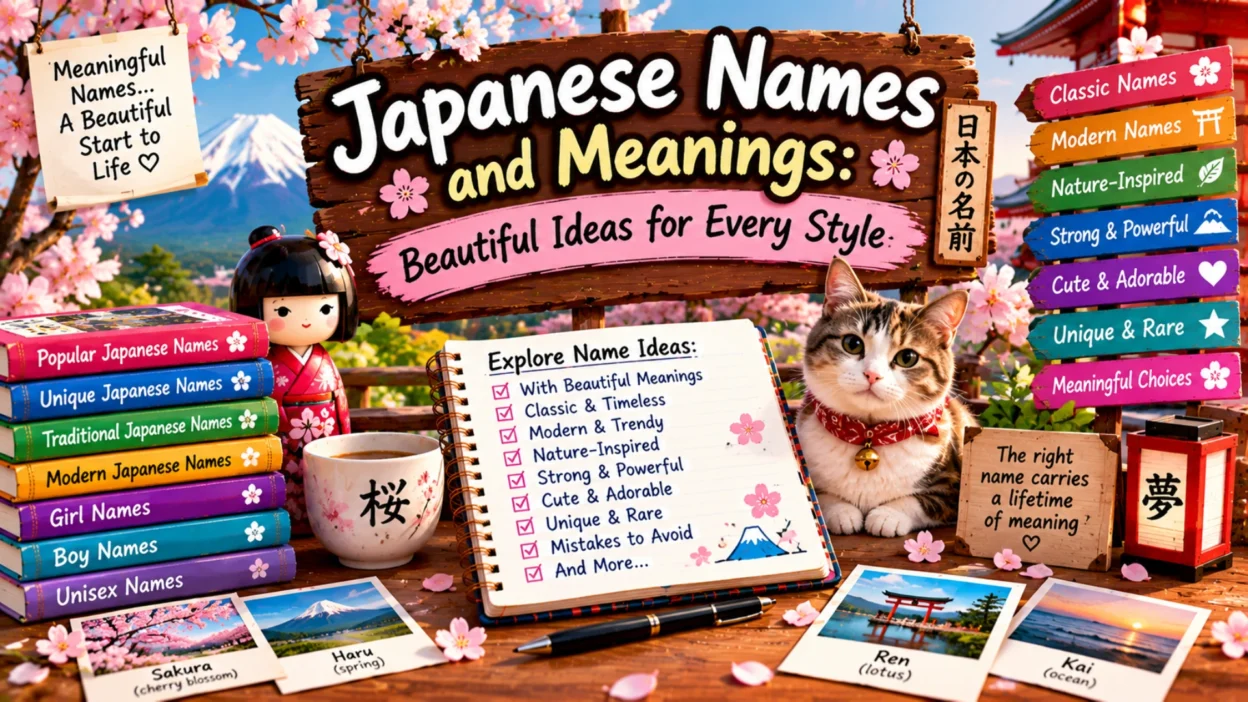
Choosing a Japanese name can feel exciting, especially when you want something beautiful, meaningful, and easy to remember. However, finding the right option isn’t always simple. Some names sound gentle and elegant, while others feel bold, modern, or inspired by nature.
This collection of Japanese names and meanings brings together a wide range of ideas for anyone searching for a name with Japanese origins or cultural inspiration. You might be looking for a name for a baby, a fictional character, a gaming profile, a pet, or a creative project. Whatever your reason, the right name can give your choice a special sense of identity.
One important detail makes Japanese names particularly interesting: their meanings often depend on the kanji characters used to write them. The same pronunciation can have several possible meanings, depending on the spelling. Therefore, it’s worth checking the intended kanji and cultural context before making a final choice.
Below, you’ll find popular Japanese names, beautiful options with meanings, and carefully organized categories for different styles. You’ll also discover practical tips for choosing a name that sounds natural and suits your purpose.
Popular Japanese Names and Meanings
These familiar Japanese names offer a starting point if you want something recognizable, appealing, and versatile. Some have several possible meanings depending on their kanji.
- Haruto
- Yuto
- Ren
- Sota
- Hiroto
- Minato
- Riku
- Kaito
- Haruki
- Itsuki
- Yuki
- Akira
- Takumi
- Daiki
- Kenta
- Hinata
- Aoi
- Asahi
- Tsubasa
- Naoki
- Sakura
- Yui
- Aiko
- Hana
- Mei
- Rin
- Hina
- Akari
- Mio
- Nanami
- Yuna
- Koharu
- Himari
- Ayaka
- Misaki
- Kaori
- Natsuki
- Sayuri
- Shiori
- Emi
- Riko
- Momoka
- Nozomi
- Chihiro
- Fumiko
- Tomomi
- Saki
- Manami
- Kanon
- Hotaru
Japanese Names With Beautiful Meanings
Japanese names can express wishes for happiness, strength, peace, beauty, and a bright future. The meanings below are illustrative possibilities; exact interpretations depend on the kanji chosen.
- Hana — Flower
- Sakura — Cherry blossom
- Akari — Light
- Hikari — Light or radiance
- Yuki — Snow or happiness
- Haruka — Distant or expansive
- Aiko — Child of love
- Megumi — Blessing
- Nozomi — Hope or wish
- Shizuka — Quiet or peaceful
- Kaede — Maple
- Ayame — Iris
- Sumire — Violet
- Tsubaki — Camellia
- Hotaru — Firefly
- Natsuki — Summer hope, depending on kanji
- Haruto — Often associated with sunlight or the sun, depending on kanji
- Daichi — Great earth, depending on kanji
- Masaru — Victory or excellence
- Isamu — Courage
- Makoto — Sincerity or truth
- Yasuko — Often associated with peace or calm, depending on kanji
- Tomoko — Often interpreted as a wise or friendly child, depending on kanji
- Kiyomi — Pure beauty, depending on kanji
- Emiko — Often associated with a beautiful or blessed child, depending on kanji
Cute Japanese Names
Cute Japanese names often have short sounds, gentle rhythms, or associations with flowers, seasons, and sweetness. These options work well for characters, pets, and other creative uses.
- Momo
- Mimi
- Yumi
- Nene
- Koko
- Riri
- Hina
- Yua
- Miu
- Mei
- Sumi
- Niko
- Chika
- Kumi
- Fuyu
- Tama
- Kiri
- Nana
- Ami
- Maki
- Runa
- Yuzu
- Kohana
- Ichika
- Momiji
Unique Japanese Names
If you prefer something less familiar, consider names associated with nature, literature, seasons, or distinctive sounds. Popularity varies by generation and region, so uniqueness depends on your audience.
- Amane
- Suzume
- Hotaru
- Kohaku
- Kanata
- Subaru
- Ibuki
- Tsukiko
- Asuka
- Chisato
- Mahiro
- Kureha
- Shion
- Itsuha
- Minori
- Ayumu
- Konomi
- Fuyuka
- Ritsu
- Nagisa
- Towa
- Kaho
- Sayo
- Uta
- Chihaya
Cool Japanese Names
Cool Japanese names can sound confident, modern, and memorable. These choices are especially useful for fictional heroes, gaming characters, and creative usernames.
- Akira
- Ren
- Ryu
- Kaito
- Hayate
- Raiden
- Shin
- Kenji
- Takeru
- Ryota
- Haru
- Makoto
- Gaku
- Jin
- Kou
- Rei
- Arata
- Shiro
- Issei
- Ryo
- Kyo
- Taiga
- Keiji
- Souta
- Hiro
Stylish Japanese Names
Stylish names often combine a smooth sound with a refined or modern impression. These options suit characters, creative projects, and people exploring Japanese naming traditions.
- Reina
- Reika
- Kaori
- Shiori
- Misaki
- Ayane
- Rina
- Nanami
- Miyu
- Riko
- Sayaka
- Erika
- Asami
- Yuzuki
- Kanade
- Koharu
- Suzuka
- Hiyori
- Minami
- Ayano
- Risa
- Madoka
- Noa
- Fuka
- Haruna
Japanese Names Inspired by Nature
Nature plays an important role in Japanese art, poetry, and naming traditions. These names draw inspiration from flowers, seasons, the sky, and the natural world.
- Sakura
- Kaede
- Ayame
- Sumire
- Tsubaki
- Hotaru
- Suzume
- Kohaku
- Asahi
- Sora
- Umi
- Nagisa
- Kiri
- Momiji
- Fuyuki
- Haruka
- Hinata
- Minori
- Wakana
- Botan
- Ran
- Shizuku
- Tsukiko
- Mizuki
- Koyuki
Japanese Names That Mean Light
Names associated with light can suggest hope, warmth, brightness, and new beginnings. The exact meaning depends on the Japanese characters used.
- Akari
- Hikari
- Hikaru
- Teru
- Akira
- Haru
- Asahi
- Koharu
- Mitsuki
- Kira
- Nozomi
- Haruto
- Hinata
- Tomomi
- Sayaka
- Akaru
- Kiyora
- Mio
- Rei
- Subaru
- Yua
- Ayaka
- Megumi
- Kanata
- Natsuki
Japanese Names Associated With Strength and Courage
These names have strong sounds or may be written with characters associated with courage, resilience, victory, or determination. Check the intended kanji before assigning a specific meaning.
- Isamu
- Takeshi
- Takeru
- Masaru
- Tsuyoshi
- Ken
- Kenji
- Daiki
- Taiga
- Ryoma
- Katsu
- Katsuro
- Goro
- Ryu
- Hayate
- Takumi
- Hiro
- Shin
- Makoto
- Kenta
- Naoki
- Arata
- Akira
- Tatsuya
- Kaito
Traditional Japanese Names
Traditional Japanese names can carry a timeless feeling and connect a character or naming choice with established naming customs. Some options are more common among older generations, while others remain widely used.
- Ichiro
- Jiro
- Saburo
- Shiro
- Goro
- Fumiko
- Yoshiko
- Sachiko
- Kazuko
- Haruko
- Keiko
- Noriko
- Masako
- Etsuko
- Toshiko
- Hiroshi
- Kazuo
- Isao
- Tadashi
- Noboru
- Osamu
- Susumu
- Yasuo
- Akiko
- Chieko
Japanese Names for Anime Characters
Anime-inspired names can help establish a character’s personality, background, and overall style. These options draw on familiar Japanese names and naming aesthetics rather than guaranteeing a connection to any particular series.
- Akira
- Haru
- Ren
- Yuki
- Sora
- Riku
- Kaito
- Rin
- Rei
- Shion
- Asuka
- Misaki
- Sakura
- Hinata
- Yuna
- Aoi
- Tsubasa
- Kanata
- Kyo
- Ryo
- Hikari
- Natsuki
- Ayame
- Itsuki
- Minato
Japanese Names for Boys
These names are commonly used as masculine names or have a masculine association in some naming contexts. Japanese given names can be unisex, and their interpretation often depends on kanji.
- Haruto
- Yuto
- Kaito
- Minato
- Riku
- Sota
- Haruki
- Takumi
- Daiki
- Kenta
- Hiroto
- Ryota
- Takeru
- Kenji
- Akira
- Hiroshi
- Naoki
- Tatsuya
- Shota
- Yuma
- Itsuki
- Taichi
- Hayato
- Ren
- Masato
Japanese Names for Girls
These names are commonly used as feminine names in Japan. Some can also be used across genders, depending on spelling and personal preference.
- Sakura
- Yui
- Aiko
- Hana
- Mei
- Rin
- Hina
- Akari
- Mio
- Nanami
- Yuna
- Koharu
- Himari
- Ayaka
- Misaki
- Kaori
- Sayuri
- Shiori
- Emi
- Riko
- Momoka
- Nozomi
- Chihiro
- Kanon
- Reina
Japanese Unisex Names
Unisex names can be appealing when you want a flexible, modern option. The usage of each name may vary according to generation, region, and kanji.
- Aoi
- Akira
- Haru
- Hinata
- Kaoru
- Makoto
- Ren
- Rei
- Sora
- Yuki
- Nao
- Hikaru
- Jun
- Izumi
- Asahi
- Mizuki
- Tsubasa
- Kanata
- Chihiro
- Noa
- Ritsu
- Minori
- Ayumu
- Kohaku
- Yuzuki
How to Choose the Perfect Japanese Name
Start by deciding what the name is for. A baby name may require careful consideration of family preferences and Japanese naming conventions, while a fictional character or gaming username allows more creative freedom.
Next, think about the sound you prefer. Short names such as Ren and Rei feel simple, while names such as Nanami and Koharu have a softer rhythm. Then explore the intended meaning rather than relying on pronunciation alone.
Japanese names can be written with different kanji, and those characters may change their meaning. Therefore, verify the spelling and interpretation using a reliable Japanese-language source or a knowledgeable speaker. Also consider pronunciation, cultural context, and whether the name is appropriate for your intended use.
Finally, say the name aloud and write it down. A name that looks attractive on a list should also feel comfortable to use. Taking time to compare a few favorites will help you choose confidently.
Common Mistakes to Avoid When Choosing Japanese Names
One common mistake is assuming every Japanese name has just one fixed meaning. In reality, the kanji used to write a name can make a significant difference.
Another mistake is selecting a name only because it appears in an anime or game. Fictional uses can differ from everyday naming practices, so check the name independently.
Avoid treating every name as exclusively masculine or feminine, too. Some names are used across genders, and usage can change over time. Likewise, don’t assume a name is traditional, rare, or popular without checking reliable sources.
Japanese Names for Pets and Creative Projects
Japanese names can be a lovely choice for pets, fictional worlds, online profiles, and creative projects. Short names are often easy to call out, while nature-inspired options can give your choice a distinctive feel.
- Momo
- Yuki
- Kumo
- Sora
- Hana
- Tora
- Kuro
- Shiro
- Mikan
- Yuzu
- Mochi
- Maru
- Neko
- Chibi
- Hoshi
- Kiki
- Tama
- Pochi
- Riku
- Nori
- Koko
- Umi
- Mugi
- Fuku
- Kohaku
Japanese Names With Elegant and Modern Sounds
If you prefer a polished, contemporary feel, these names offer a mix of familiar sounds and stylish options. Their precise meanings depend on the kanji or writing style selected.
- Reina
- Reika
- Miyu
- Yuzuki
- Kanade
- Hiyori
- Ayane
- Rina
- Riko
- Noa
- Asami
- Minami
- Haruna
- Suzuka
- Madoka
- Itsuki
- Arata
- Kaito
- Minato
- Haruto
- Ren
- Rui
- Ryo
- Shion
- Towa
Japanese Names Inspired by Peace and Happiness
Names connected with peace, happiness, and good fortune can express a positive wish for the future. These associations should be checked against the specific kanji used.
- Yuki
- Megumi
- Sachi
- Sachiko
- Yasuko
- Haru
- Natsuki
- Nozomi
- Aiko
- Emiko
- Fumiko
- Kazumi
- Miyuki
- Kiyomi
- Masami
- Ayumi
- Hiro
- Makoto
- Rei
- Tomomi
- Kanon
- Akari
- Hinata
- Minori
- Koharu
Extra Tips for Understanding Japanese Name Meanings
Japanese names can be especially meaningful because their written forms may carry ideas related to nature, personal qualities, family hopes, or the seasons. However, pronunciation alone does not always reveal a name’s meaning.
For example, Hana is commonly associated with “flower” when written with the corresponding kanji. Sakura is associated with cherry blossoms, while Sora can mean “sky” when written as 空. Other names may have several interpretations depending on the characters selected.
If you are choosing a name for a baby, consider checking Japanese naming references and discussing the written form with a fluent Japanese speaker. This is particularly helpful when you want a specific meaning or a name that feels natural in Japanese.
For characters, pets, or usernames, you have more creative flexibility. Even so, understanding the name’s background can make your choice more thoughtful and respectful.
Frequently Asked Questions About Japanese Names and Meanings
What are some popular Japanese names?
Popular Japanese names include Haruto, Ren, Yuto, Minato, Sakura, Yui, Mei, Aoi, and Hina. Popularity changes by year and gender, so current rankings are useful if you want the most fashionable choices.
What Japanese name means flower?
Hana (花) means “flower,” while Sakura (桜) refers to a cherry blossom. Both are recognizable nature-related names, although the spelling and usage can vary.
What Japanese names mean light?
Hikari and Akari are commonly associated with light when written with suitable kanji. Hikaru can also be associated with shining or radiance, depending on its written form.
Are Japanese names gender-neutral?
Yes. Names such as Aoi, Akira, Haru, Hikaru, Makoto, and Yuki can be used across genders. However, their gender associations may vary with kanji, generation, and individual preference.
How do Japanese names get their meanings?
Many Japanese names are written with kanji characters that carry individual meanings. Different kanji can share the same pronunciation, so the written form is important when interpreting a name.
Where can I verify Japanese name meanings?
Consult reputable Japanese dictionaries, Japanese-language naming references, and native speakers who understand kanji and naming conventions. Be careful with lists that give a single meaning without showing the written characters.
Conclusion: Find the Japanese Name That Feels Right
Exploring Japanese names and meanings opens up many possibilities, from elegant and traditional choices to modern names inspired by nature, happiness, and strength. Whether you are naming a baby, developing a fictional character, choosing a pet name, or creating an online identity, this collection gives you a helpful starting point.
As you narrow down your favorites, consider the name’s sound, spelling, cultural background, and intended meaning. Remember that Japanese names can have different interpretations depending on the kanji, so verify the written form before making an important decision.
You don’t have to choose the first name that catches your attention. Compare a few options, say them aloud, and think about how each one fits your purpose. With a little research and thoughtful consideration, you can find a Japanese name that feels distinctive, meaningful, and memorable.

Robert Thomas is a passionate name researcher and writer who explores the history, meanings, and cultural stories behind names from around the world. With a deep interest in baby names, pet names, fantasy names, and naming trends, he creates helpful guides that make finding the perfect name simple and inspiring. Robert focuses on sharing unique, meaningful, and timeless name ideas for families, writers, gamers, and anyone searching for a name with personality and purpose.